When ET launched its landmark North Temple Landfill remediation project, the company made a bold commitment to not only restore contaminated land but to do it through innovation. Now, that vision has taken a major step forward through a partnership with Leachate Management Specialists (LMS) and the implementation of the Wind-Aided Intensified eVaporation (WAIV®) system, which is a cutting-edge technology redefining how leachate is treated and managed.
The Challenge: Managing Leachate Sustainably
Leachate—the liquid that drains or “leaches” from landfills—has long been one of the most complex byproducts of decomposing waste. Traditionally, this contaminated liquid is transported off-site by diesel tanker trucks to wastewater treatment facilities, an approach that adds significant cost, increases emissions, and creates dependency on third-party disposal sites. At North Temple, ET saw an opportunity to take a different path, one that would keep treatment on-site, reduce environmental impact and “allow the client to control their own destiny,” as Bill Higginbotham, CEO of ET, puts it.
The WAIV Difference
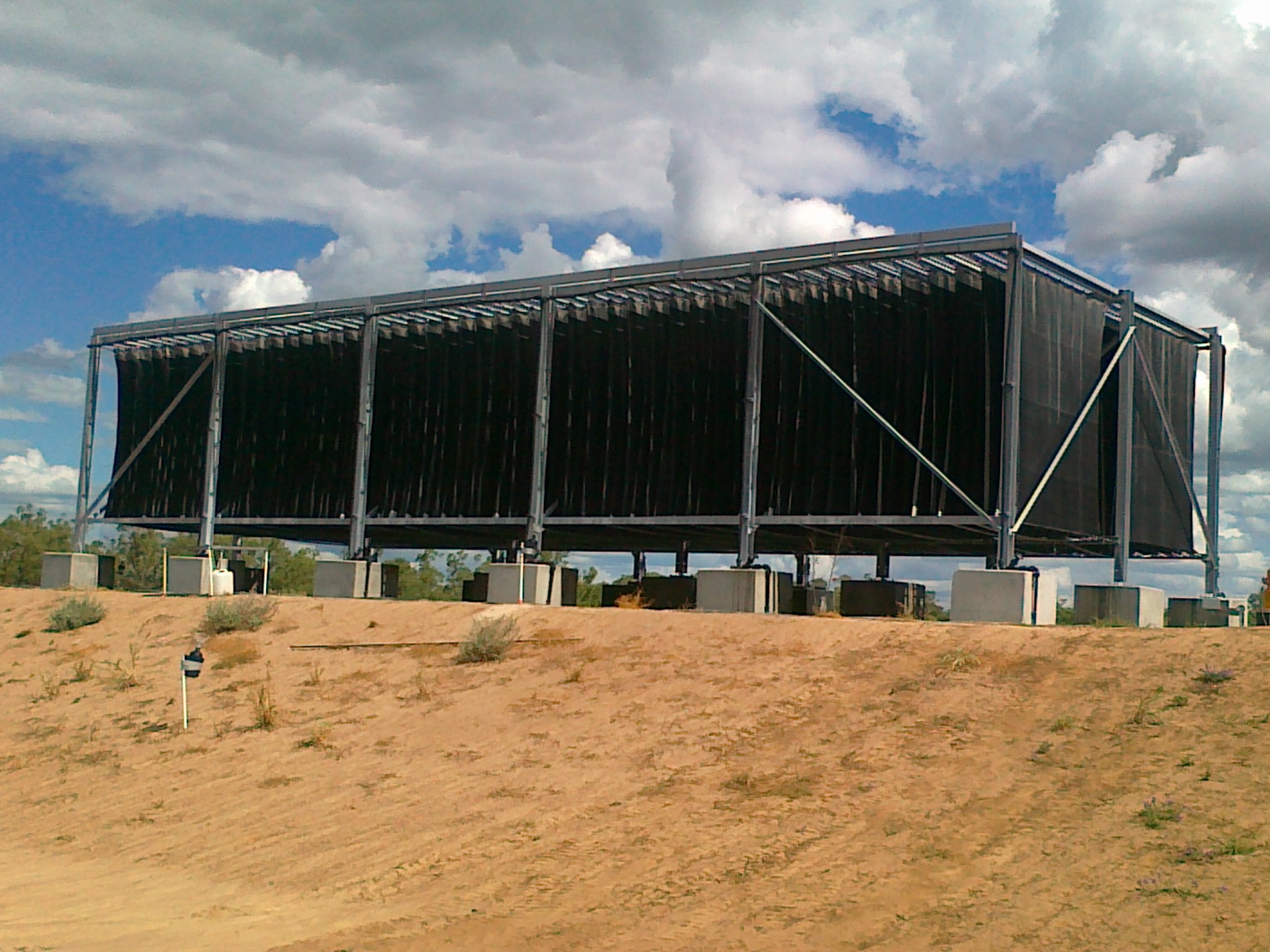
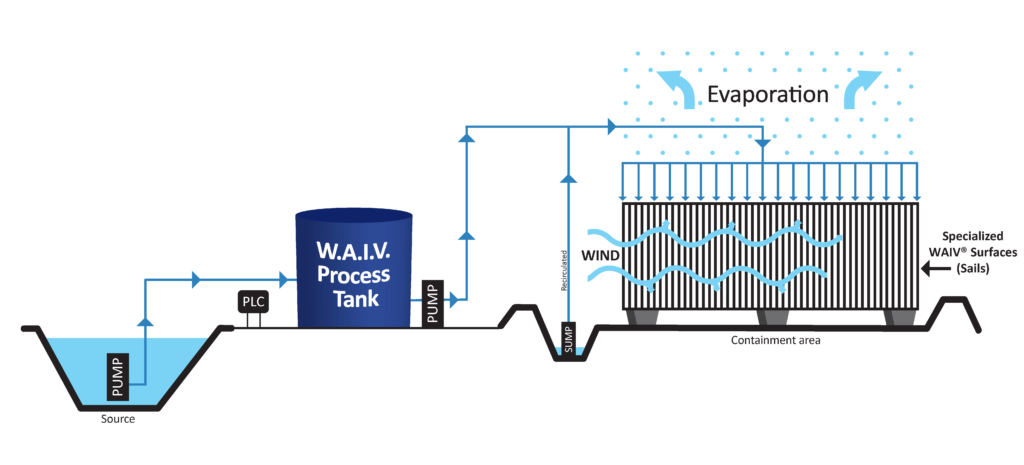
Unlike conventional evaporation systems that often rely on energy-hungry thermal processes or spray-in-air techniques that risk aerosol drift and odor issues, the WAIV® system takes a more natural approach. At its core, WAIV® technology maximizes wetted surface area within a compact footprint. Liquid from a landfill’s leachate pond is continuously circulated across specialized fabric “sails.” These materials were originally developed in Israel by a team led by Dr. Jack Gilron. The sails are specially designed to naturally spread moisture across their surface. After acquiring the patent for this innovation, LMS began to build on it, creating new use cases and highly improved transportability. As air and wind pass over the wetted sails, differences in relative humidity drive an intensified evaporation process. Essentially, this uses nature’s own forces to purify and reduce the leachate volume. “We’re leveraging natural processes to solve practical problems,” explains Brad Granley, LMS Founder. “By creating a dense amount of wetted surface area and taking advantage of the natural movement of air, we’re able to achieve high evaporation rates without the energy demands of traditional systems.”
Why North Temple Landfill is the Perfect Candidate
Salt Lake City’s semi-arid climate provides an ideal environment for the WAIV® system to thrive. “It’s dry and windy—exactly the conditions that amplify evaporation,” Higginbotham said. ET and Ninigret (the developer on the project) spent significant time and effort planning for, locating, and erecting the plant. Since startup, the North Temple installation has exceeded performance expectations, evaporating more liquid than projected from day one.
A Win for the Environment and for Cost Efficiency
WAIV®’s benefits extend far beyond environmental sustainability. By keeping leachate treatment on-site, landfills eliminate the need for diesel transportation and costly disposal fees charged by wastewater facilities, if industrial discharges are even permittable. This not only cuts emissions and operational costs but also reduces dependency on external systems that may impose restrictions or future rate increases. Moreover, the process prevents potential contaminants like PFAS from passing through municipal wastewater systems and entering waterways, further enhancing its environmental value. According to Higginbotham, “We are seeing numerous POTWs around the U.S. preventing acceptance of any leachate due to PFAS concerns.” “With WAIV®, facilities are no longer at the mercy of external costs or the tightening discharge requirements of POTWs,” Granley notes. “They can handle everything responsibly and efficiently on their own site.”
Engineering Innovation in Action
For Granley, a professional engineer with more than three decades of experience, the motivation behind WAIV® aligns perfectly with his company’s philosophy: finding a better way. LMS, which previously pioneered the award-winning Phyto-Utilization™ technology (using trees and plants to remediate contaminated sites and dispose of leachate on site), continues to push the envelope on sustainable engineering. “Everybody says they want innovation,” Granley said, “but few are willing to be first. ET and the North Temple team were early adopters of WAIV®, and their results are proving that the risk was well worth it.”
What’s Next: Mobile WAIV® Units
Building on North Temple’s success, LMS is now developing a containerized version of WAIV® that is housed within standard shipping containers or trailers and includes low-power-draw fans to maximize evaporation 24/7/365 even when the wind is not blowing. This mobile, plug-and-play configuration will make deployment faster and more affordable, requiring minimal site work while offering maximum performance. “All a client will need is electricity and leachate input,” Granley said. “It’s an exciting evolution that will simplify logistics, reduce costs, and make sustainable leachate management more accessible than ever.”
A Shared Commitment to Progress
Through this collaboration, ET and LMS are proving that forward-thinking engineering can simultaneously protect the environment, reduce costs, and enhance project efficiency. At North Temple, innovation isn’t just cleaning up the past. It’s shaping a smarter, more sustainable future. Read our previous blog post on the North Temple project and stay tuned for further updates to come!